


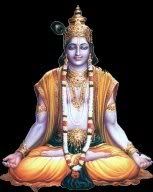
The Supreme Vedas advocates a form of spiritual communism that makes a person to realise the nature of God through rational thinking(tarka) and logical discussions.
While the Vedas promote spiritual communism for the betterment of soul by gaining knowledge, a new form of communalism and social prejudice has become firm in the present India, which is supported by most of the groups and organisations inside and outside the country. This is called anti-brahminism, the idea that brahmins are villians and the religion invented by them comprising of Gods like Shiva, Krishna, Rama etc all depict the brahmanic villy propaganda and the oppressions and destruction made by them to the lower castes.
Dr. B.R. Ambedkar, one of the member of the drafting committee of our Indian Constitution is often portrated as the modern Manu who made the constitution in such a way that it gives each and every human being equal rights.
But the funny fact in India is that often whenever any book or article is written
against Hinduism and any Hindu Organisations wants a ban on it, it is often termed as Hindu chauvinism and many leftists,neo-buddhists backed by jihadis and missionaries claim that If such book is banned its an insult to the freedom of speech/expression. While when a similar kind of book is written against other religions, those book are asked to be banned terming it as hurting one's religious sentiments. Similar thing happened when some Hindus wanted a ban on Ambedkar's "Riddles in Hinduism", for its pathetic allegations against Rama and Krishna, and this was termed Hindu chauvinism. Even the protest against the republication of the book with state funds was to no avail, and the book has been ceremoniously presented(even today) to foreign visitors in the Ambedkar centenary year including Nelson Mandela. So,its a rule in India that any Hindu demands for a ban are always to be ignored.
Ambedkar’s most direct attack on Hindu sensibilities was his merciless pamphlet Riddles in Hinduism. Its central thesis is the absolute reduction of Hindu culture to a mere cover for caste and untouchability. That part was largely ignored by the public, because it was the type of thing which so many westernized writers and Christian missionaries had been saying for some time. The part which really caused offence was the chapter Riddles of Rama and Krishna, which contains a lot of ordinary scandal-mongering.
Though we respect Dr. Ambedkar for his cause of Dalit upliftment, we oppose him for his attack on Hindu sentiments through his literatures. Uplifting anyone doesn't mean that we must do religious bashing. Following Ambedkar and Phule many authors of similar norms like Periyar, etc kept on writing baseless theories with some evidences taken out of context from the literatures to demean Hindu culture. The irony is that the person who played a role in drafting our constitution of Hindustan(though we prefer to call it Bharatavarsha and its religion Sanatana Dharma) himself was a staunch opposer of Hinduism and tried all his level best to destroy Hinduism(which for him was a Brahmanic oppressive religion).
In modern times many neo-buddhist,pro-dalit groups along with jihadis and Christians use the works of Ambedkar to gullible the Hindus and use it as a weapon for conversion. These people who call themselves as Dalit/Dravidian feel proud about their anti-brahmanism innovation and say that Ambedkar, Periyar etc all defeated and destroyed Brahmanic dubios religion of Hinduism and their gods like Rama, Krishna etc. For this let me quote from Sri Sita Ram Goel's book "Islam vis-via-Hindu Temples" which quotes poet Amir Khusru describing the Mohammedans killing of satanic follower Brahmins(Kufr's): --
"Amir Khusru describes with great glee how the heads of brahmins danced from their necks and fell to ground at their feets whom Malik Kafur had slaughtered during the sack of the temples at Chidambaram.
Firoz Shah Tughlaq got bags filled with cow's flesh, tied them to Brahmins neck and had them paraded through his army camp at Kangra.
Muhammed Shah II Bahamani bestowed on himself of being a ghazi by killing the helpless brahmin priests(Kufr who worship Gods other than Quranic Allah) at kondapalli.
In many other places local villagers were asked to keep away Brahmins and make the Brahmins vacate their places to avoid attacks on those places by Islamic conquerors.
THE PRESENT DAY PROGRESSIVE LEFTISTS AND DALITS whose main plank is anti-brahmanism have no reason to feel innovative about their ideology. Anti-brahmanism in India is as old as the advent of Islam. Our present day leftists have to be told that they are no more than the ideological descendants of the Islamic invaders."
King Rama, one of the noble person admired for his noble character by many is often portrayed as a villian by the leftists.In this article let us critically examine the arguments put forth by Ambedkar in his "Riddles of Rama and Krishna" against King Rama and refute it wherever necessary and try to arrive at a conclusion.
Before starting what we have to understand is that the present day Ramayana by Valmiki has undergone many interpolations and adulterations. So keeping that in mind we must critically examine the Ramayana and reject the adulterations.
Next onwards , Dr Ambedkars arguments in Blue Italics and the our comment/reply in Bold.
Rama is the hero of the Ramayana whose author is Valmiki. The story of the Ramayana is a very short one. Besides it is simple and in itself there is nothing sensational about it.
This analogy can work for anyone's story, like for even the story of Buddha. Thus it can also be said that the story of Buddha is very short one and besides there nothing sensational about it. Buddha saw 3 men suffering and left his home and wife and ran away!!
Rama is the son of Dasharatha the king of Ayodhya the modern Benares. Dasharatha had three wives, Kausalya, Kaikeyi and Sumitra besides several hundred concubines. Kaikeyi had married Dasharatha on terms which were at the time of marriage unspecified and which Dasharatha was bound to fulfil whenever he was called upon by Kaikeyi to do so. Dasharatha was childless for a long time. An heir to the throne was ardently desired by him. Seeing that there was no hope of his begetting a son on any of his three wives he decided to perform a Putreshti Yajna and called the sage Shrung at the sacrifice who prepared pindas and gave the three wives of Dasharatha to eat them.
Probably Ambedkar has not read Ramayana properly. In Putra Kameshti Yagna pindas were not given. The word "Pinda" used by Dr. BRA mbedkar itself shows the biasedness and the hatred Ambedkar had towards Hinduism and its hero Rama.
After they ate the pindas three wives became pregnant and gave birth to sons. Kausalya gave birth to Rama, Kaikeyi gave birth to Bharata and Sumitra gave birth to two sons Laxman and Satrughana. In due course Rama was married to Sita. When Rama came of age, Dasharatha thought of resigning the throne in favour of Rama and retiring from kingship. While this was being settled Kaikeyi raised the question of rendering her satisfaction of the terms on which she had married Dasharatha. On being asked to state her terms she demanded that her son Bharata should be installed on the throne in preference to I Rama and Rama should live in forest for 12 years. Dasharatha with great reluctance agreed. Bharata became king of Ayodhya and Rama accompanied by his wife Sita and his step brother Laxman went to live in the forest. While the three living in the forest Ravana the king of Lanka kidnapped Sita and took her away and kept her in his palace intending to make her one of his wives. Rama and Laxman then started search of Sita. On the way they meet Sugriva and Hanuman two leading personages of the Vanara (monkey) race and form friendship with them. With their help the place of the abduction was located and with their help they marched on Lanka, defeated Ravana in the battle and rescued Sita. Rama returns with Laxman and Sita to Ayodhya. By that time twelve years had elapsed and the term prescribed by Kaikeyi was fulfilled with the result that Bharata gave up the throne and in his place Rama became the king of Ayodhya.
Such is in brief the outline of the story of the Ramayana as told by Valmiki.
There is a need for correction. Vanaras doesn't mean monkey race(The term race used by Ambedkar also shows how much he was influenced by theWestern indologists Racial theories, which the Britishers used as a weapon to divide India through there writings, which inturn was blindly accepted by many Indian Historians and thinkers). Vanara is a tribe to which Hanuman belonged and Hanuman himself was a great scholar of Vedas and also a Vyakarana Pandita.(Can any monkey read and write??)
There is nothing in this story to make Rama the object of worship. He is only a dutiful son. But Valmiki saw something extraordinary in Rama and that is why he undertook to compose the Ramayana. Valmiki asked Narada the following question :
"Tell me Oh! Narada, who is the most accomplished man on earth at the present time?"
and then goes on to elaborate what he means by accomplished man. He defines his accomplished man as:
" Powerful, one who knows the secret of religion, one who knows gratitude, truthful, one who is ready to sacrifice his self interest even when in distress to fulfil a religious vow, virtuous in his conduct, eager to safeguard the interests of all, strong pleasing in appearance with power of self-control, able to subdue anger, illustrious, with no jealousy for the prosperity of others, and in war able to strike terror in the hearts of Gods."
Narada then asks for time to consider and after mature deliberation tells him that the only person who can be said to possess these virtues is Rama, the son of Dasharatha.
King Rama was a noble King and we will discuss about his virtues it in another separate article.
To know the greatness of King Rama, we would also request the readers to purchase the Book "Bhagavan Shree RamaChandra" by Sri Sudhakar Chaturvedi available at VV Puram Arya Samaj, Bangalore so that it encourages the publishers to bring books of similar kinds to the market which upheld our dharma.
It is because of his virtues that Rama has come to be deified. But is Rama a worthy personality of deification? Let those who accept him an object worthy of worship as a God consider the following facts.
Rama's birth is miraculous and it may be that the suggestion that he was born from a pinda prepared by the sage Shrung is an allegorical glass to cover the naked truth that he was begotten upon Kausalya by the sage Shrung although the two did not stand in the relationship of husband and wife. In any case his birth if not disreputable in its origin is certainly unnatural.
Our Comment : 1> This is the hatredness at its best. Look how Ambedkar says that if Sage Shrunga performed Yagna to appease Gods for granting children to Dasharatha, does it mean he himself had illicit relationship with Dasharatha's wife?? Thank God he didnt write "Gandhi who was a devotee of Rama(though in reality he was not) is called the Father Of Nation because he had illegetemate relation with all Indians " .
2> Probably Ambedkar had read Abrahamic teachings and birth of jesus Christ etc might have created a doubt in his minds making him to think how could this happen? Even we oppose such baseless ideas which are present in same fairy tale books like Torah,Bible, Quran + Hadiths etc.
3> Thanks to Ambedkar that he didnt say that the God who was pleased by Shrunga, that God himself had illicit relation with Dasharatha's wives. By such logic tomorrow if any guy goes to a temple and prays God to grant him good marks in exam. And after that if that guy gets good marks he may claim that the priest in the temple himself wrote exam on behalf of him.
4> If at all in any home, if 14 children are born and if 12 dies out and 2 sustains, can we claim that those 12 or the existing 2 are from different parental relations??? That would be a foolishness.
By applying Ambedkar's logic, we can also claim the illegetemate nature of birth in Buddha. It is said that before Buddha's birth Buddha's mother was visited by White elephant in the night. Since Buddha's ears are depicted as large and his mother was visited by white elephant(which accidentally has large ears) can we imagine the illegetamate relation between Buddha's mother and the white elephant!!!??!!
There are other incidents connected with the birth of Rama the unsavory character of which it will be difficult to deny.
Valmiki starts his Ramayana by emphasizing the fact that Rama is an Avatar of Vishnu and it is Vishnu who agreed to take birth as Rama and be the son of Dasharatha. The God Brahma came to know of this and felt that in order that this Rama Avatar of Vishnu be a complete success arrangement shall be made that Rama shall have powerful associates to help him and cooperate with him. There were none such existing then.
The Gods agreed to carry out the command of Brahma and engaged themselves in wholesale acts of fornication not only against Apsaras who were prostitutes not only against the unmarried daughters of Yakshas and Nagas but also against the lawfully wedded wives of Ruksha, Vidhyadhar, Gandharvas, Kinnars and Vanaras and produced the Vanaras who became the associates of Rama.
There is nothing like avatar of God etc. Also these stories of kinnaras,yakshas etc have been added by vaama margis. Even many Buddhist texts details about nagas, yakshas etc and many neo-buddhists claim the authorship of Tantras as buddhistic origin. If that be true then all the credit of making such illogical stories on yakshas, kinnaras etc goes to Buddhists.
The very fact that Buddha who is often depicted as the creator of Atheism(while in reality there were many atheists prior to him like Jabali, Charvakas who drew inspiration from Kapila Maharshi's Saankhya philosophy) by his disciples and he himself is being worshipped itself shows the double-standards maintained by the Buddhists. One more example being Dalai Lama, who preaches Ahimsa and at the same time consumes non-vegeterian diet just like Buddha who died by eating pork.
Rama's birth is thus accompanied by general debauchery if not in his case certainly in the case of his associates. His marriage to Sita is not above comment. According to Buddha Ramayana, Sita was the sister of Rama, both were the children of Dasharatha. The Ramayana of Valmiki does not agree with the relationship mentioned in Buddha Ramayana. According to Valmiki Sita was the daughter of the king Janaka of Videha and therefore not a sister of Rama. This is not convincing for even according to Valmiki she is not the natural born daughter of Janaka but a child found by a farmer in his field while ploughing it and presented by him to king Janaka and brought up by Janaka. It was therefore in a superficial sense that Sita could be said to be the daughter of Janaka.
It is not understood why Ambedkar brings Buddhist version of Ramayana when talking about Hinduism. Buddha being a pessimistic fraud who after seeing 3 people suffering left his wife and family and ran away. It was after that incident that women's status in the society fell down.(We even doubt that when many such people followed Buddha by leaving their wives, these wives might have become Apsaras,Kinnaris etc which were incorporated in Hindu stories in later stages while in reality these things have not happened).
The followers of Buddha(who left his wife and ran away and who thought that marriage and wife is an obstacle in spiritual upliftment.. Though it would had been better if he had thinked about these before marriage as it would have avoided Buddha's wife from facing agony for husband), thought that marriage is a bondage(who knows by applying Ambedkar's logic we can also think that they(buddhists) might have started the process of illegal relationships without marriage since according to them marriage was a obstacle in path of nirvana!!) have edited the original Ramayan story and made Rama and Sita brother and Sister.
The story in the Buddha Ramayana is natural and not inconsistent with the Aryan rules of marriage. If the story is true, then Rama's marriage to Sita is no ideal to be copied. In another sense Rama's marriage was not an ideal marriage which could be copied. One of the virtues ascribed to Rama is that he was monogamous. It is difficult to understand how such a notion could have become common. For it has no foundation in fact. Even Valmiki refers to the many wives of Rama. These were of course in addition to his many concubines. In this he was the true son of his nominal father Dasharatha who had not only the three wives referred to above but many others.
1>The Buddha who left his Raja Dharma and ran away fearing to face sufferings was a role model of his disciples and these disciples have even removed the verses which talks about war between Rama and Ravan in their version of Ramayan. By considering all these we can judge that the Buddha Ramayan is a edited version of Valmiki Ramayan with adding some features of Buddha's life story.
2>Again another baseless argument posed by Ambedkar. He compares Valmiki Ramayan and Buddha Ramayan and says that Rama and Sita were brother and sister and the marriage between them is not to be copied. If at all Buddha Ramayan is true then why Ambedkar is considering Valmiki Ramayan and mixing both stories? This itself is a Riddle :D
3> He later says that Rama had many concubines without any reference to authentic verse.(Note: Uttara Ramayana is completely a fiction added by Buddhists(who later converted to hinduism) who were engaged in all kind of illegal activities in their institutions and since there was no rules and regulations to join Buddhist institutions[as such in Gurukula system where in each disciple is tested for his virtue and knowledge before making them disciples], many frauds, vaama margis crept into those institutions and these same people after being converted back to Hinduism by Shankaracharya added obscure stories into Hindu Scriptures.By the similar logic as used by Ambedkar anyone can claim that Probably inspired by Buddhists institutions which lacked merit based teaching , Ambedkar might have made certain rules in constitution which is somewhat against Merit Based Education).
4>Even to this day Rama is called eka-patni vratasta and he is admired for it, since he didnt follow his father who was polygamous.
Let us next consider his character as an individual and as a king. In speaking of him as an individual I will refer to only two incidents one relating to his treatment of Vali and other relating to his treatment of his own wife Sita. First let us consider the incident of Vali.
Vali and Sugriva were two brothers. They belonged to the Vanar race and came from a ruling family which had its own kingdom the capital of which was Kishkindha. At the time when Sita was kidnapped by Ravana, Vali was reigning at Kishkindha. While Vali was on the throne he was engaged in a war with a Rakshasa by name Mayavi. In the personal combat between the two Mayavi ran for his life. Both Vali and Sugriva pursued him. Mayavi entered into a deep cavity in the earth. Vali asked Sugriva to wait at the mouth of the cavity and himself went inside. After sometime a flood of blood came from inside the cavity. Sugriva concluded that Vali must have been killed by Mayavi and came to Kishkindha and got himself declared king in place of Vali and made Hanuman his Prime Minister
As a matter of fact, Vali was not killed. It was Mayavi who was killed by Vali. Vali came out of the cavity but did not find Sugriva there. He proceeded to Kishkindha and to his great surprise he found that Sugriva had proclaimed himself king. Vali naturally became enraged at this act of treachery on the part of his brother Sugriva and he had good ground to be. Sugriva should have ascertained, should not merely have assumed that Vali was dead. Secondly Vali had a son by name Angad whom Sugriva should have made the king as the legitimate heir of Vali. He did neither of the two things. His was a clear case of usurpation. Vali drove out Sugriva and took back the throne. The two brothers became mortal enemies.
This occurred just after Ravana had kidnapped Sita. Rama and Laxman were wandering in search of her. Sugriva and Hanuman were wandering in search of friends who could help them to regain the throne from Vali. The two parties met quite accidentally. After informing each other of their difficulties a compact was arrived at between the two. It was agreed that Rama should help Sugriva to kill Vali and to establish him on the throne of Kishkindha. On the part of Sugriva and Hanuman it was agreed that they should help Rama to regain Sita. To enable Rama to fulfil his part of the compact it was planned that Sugriva should wear a garland in his neck as to be easily distinguishable to Rama from Vali and that while the dual was going on Rama should conceal himself behind a tree and then shoot an arrow at Vali and kill him. Accordingly a dual was arranged, Sugriva with a garland in his neck and while the daul was on, Rama standing behind a tree shot Vali with his arrow and opened the way to Sugriva to be the king of Kishkindha. This murder of Vali is the greatest blot on the character of Rama. It was a crime which was thoroughly unprovoked, for Vali had no quarrel with Rama. It was most cowardly act for Vali was unarmed. It was a planned and premeditated murder.
Comments : 1> Ambedkar intentionally hides the fact that King Rama agreed to kill Vali, since Vali had illegally made Sugriva's wife as captive.
2> If we go by Valmiki Ramayan's story there is also a story which says that Vali had a boon which made him to acquire half of his opposer's strength by which he always remained undefeated. The above arguments by Ambedkar itself shows how biased are his thinkings and how he selectively takes many story out of context and interpret in his own way.
Consider his treatment of his own wife Sita. With the army collected for him by Sugriva and Hanuman, Rama invades Lanka. There too he plays the same mean part as he did as between the two brothers Vali and Sugriva. He takes the help of Bibhishana the brother of Ravana promising him to kill Ravana and his son and place him on the vacant throne. Rama kills Ravana and also his son lndrajit. The first thing Rama does after the close of the fight is to give a decent burial to the dead body of Ravana. Thereafter he interests himself in the coronation of Bibhishana and it is after the coronation is over that he sends Hanuman to Sita and that took to inform her that he, Laxman and Sugriva are hale and hearty and that they have killed Ravana.
The first thing he should have done after disposing of Ravana was to have gone to Sita. He does not do so. He finds more interest in the coronation than in Sita. Even when the coronation is over he does not go himself but sends Hanuman. And what is the message he sends? He does not ask Hanuman to bring her. He asks him to inform her that he is hale and hearty. It is Sita who expresses to Hanuman her desire to see Rama. Rama does not go to Sita his own wife who was kidnapped and confined by Ravana for more than 10 months. Sita is brought to him and what does Rama say to Sita when he sees her? It would be difficult to believe any man with ordinary human kindness could address to his wife in such dire distress as Rama did to Sita when he met her in Lanka if there was not the direct authority of Valmiki. This is how Rama addressed her :
I have got you as a prize in a war after conquering my enemy your captor. I have recovered my honour and punished my enemy. People have witnessed my military prowess and I am glad my abours have been rewarded. I came here to kill Ravana and wash off the dishonour. I did not take this trouble for your sake." Could there be anything more cruel than this conduct of Rama towards Sita? He does not stop there. He proceeded to tell her:
" I suspect your conduct. You must have been spoiled by Ravana. Your very sight is revolting to me. On you daughter of Janaka, I allow you to go anywhere you like. I have nothing to do with you. I conquerred you back and I am content for that was my object. I cannot think that Ravana would have failed to enjoy a woman as beautiful as you are."
Though King Rama says the above words he is said to have said these words with sorrow and tears in his eyes.
naturally Sita calls Rama low and mean and tells him quite that she would have committed suicide and saved him all this if when Hanuman first came he had sent her a message that he abandoned her on the ground that she was kidnapped. To give him no excuse Sita undertakes to prove her purity. She enters the fire and comes out unscathed. The Gods satisfied with this evidence proclaim that she is pure. It is then that Rama agrees to take her back to Ayodhya.
Comments : 1> This Agni Pariksha is a later day interpolation.
2> During marriage customs in some traditions symbolically it is believed that the bride is purified with Agni and then given to groom. Probably idiots who have not understood these symbolic nature might have re-interpreted King Rama's Remarriage with Sita as Agni Pariksha etc.
3> Also I would like to add one more thing here, if at all this Agni Pariksha wouldn't have happened the same Ambedkar or people of his norms would have attacked on the character of Sita, just like they are attacking on Rama's character. Many followers of certain religious sects who themself dont respect women and say that 4 women is equal to 1 men etc attack Rama as being harsh towards his wife and at the same time even say Sita's character is doubtfull. What else can we expect from those religious fanatics who themself follow and believe in psychophants as their Prophets?
And what does he do with her when he brings her back to Ayodhya. Of course, he became king and she became queen. But while Rama remained king, Sita ceased to be a queen very soon. This incident reflects great infamy upon Rama. It is recorded by Valmiki in his Ramayana that some days after the coronation of Rama and Sita as king and queen Sita conceived. Seeing that she was carrying some residents of evil disposition began to calumniate Sita suggesting that she must have conceived from Ravana while she was in Lanka and blaming Rama for taking such a woman back as his wife. This malicious gossip in the town was reported by Bhadra, the Court joker to Rama. Rama evidently was stung by this calumny. He was overwhelmed with a sense of disgrace. This is quite natural. What is quite unnatural is the means he adopts of getting rid of this disgrace. To get rid of this disgrace he takes the shortest cut and the swiftest means—namely to abandon her, a woman in a somewhat advanced state of pregnancy in a jungle, without friends, without provision, without even notice in a most treacherous manner. There is no doubt that the idea of abandoning Sita was not sudden and had not occurred to Rama on the spur of the moment. The genesis of the idea the developing of it and the plan of executing are worth some detailed mention. When Bhadra reports to him the gossip about Sita which had spread in the town Rama calls his brothers and tells them his feelings. He tells them Sita's purity and chastity was proved in Lanka, that Gods had vouched lor it and that he absolutely believed in her innocence, purity and chastity. "All the same the public are calumniating Sita and are blaming me and putting me to shame. No one can tolerate such disgrace. Honour is a great asset, Gods as well as great men strive to maintain it in tact. I cannot bear this dishonour and disgrace. To save myself from such dishonour and disgrace I shall be ready even to abandon you. Don't think I shall hesitate to abandon Sita."
This story has been added by pauraniks just to make Rama and Sita as God's incarnations and to prove that Rama went to Vaikunta and Sita being daughter of Mother earth went back to earth. These baseless stories added by the pauraniks is fully illogical and must be rejected from its core.
This shows that he had made up his mind to abandon Sita as the easiest way of saving himself from public calumny without waiting to consider whether the way was fair or foul. The life of Sita simply did not count. What counted was his own personal name and fame. He of course does not take the manly course of stopping this gossip, which as a king he could do and which as a husband who was convinced of his wife's innocence he was bound to it. He yielded to the public gossip and there are not wanting Hindus who use this as ground to prove that Rama was a democratic king when others could equally well say that he was a weak and cowardly monarch: Be that as it may that diabolical plan of saving his name and his fame he discloses to his brothers but not to Sita the only person who was affected by it and the only person who was entitled to have notice of it. But she is kept entirely in the dark. Rama keeps it away from Sita as a closely guarded secret and was waiting for an opportunity to put his plan into action. Eventually the cruel fate of Sita gives him the opportunity he was waiting for. Women who are carrying exhibit all sorts of cravings for all sorts of things. Rama knew of this. So one day he asked Sita if there was anything for which she felt a craving. She said yes. Rama said what was it. She replied that she would like to live in the vicinity of the Ashrama of sage on the bank of the river Ganges and live on fruits and roots at least for one night. Rama simply jumped at the suggestion of Sita and said " Be easy my dear I shall see that you are sent there tomorrow ". Sita treats this as an honest promise by a loving husband. But what does Rama do? He thinks it is a good opportunity for carrying through his plan of abandoning Sita. Accordingly he called his brothers to a secret conference and disclosed to them his determination to use this desire of Sita as an opportunity to carry out his plan of abandonment of Sita. He tells his brothers not to intercede on behalf of Sita, and warns them that if they came in his way he would look upon them as his enemies. Then he tells Laxman to take Sita in a chariot next day to the Ashram in the jungle on the bank of the river Ganges and to abandon her there. Laxman did not know how he could muster courage to tell Sita what was decided about Sita by Rama. Sensing his difficulty Rama informs Laxman that Sita had already expressed her desire to spend some time in the vicinity of an Ashrama on the bank of the river and eased the mind of Laxman. This confabulation took place at night. Next morning Laxman asked Sumanta to yoke the horses to the chariot. Sumanta informs Laxman of his having done so. Laxman then goes into the palace and meets Sita and reminds her of her having expressed her desire to pass some days in the vicinity of an Ashrama and Rama having promised to fulfil the same and tells her of his having been charged by Rama to do the needful in the matter. He points to her the chariot waiting there and says 'let us go!' Sita jumps into the chariot with her heart full of gratitude to Rama. With Laxman as her companion and Sumanta as coachman the chariot proceeds to its appointed place. At last they were on the bank of the Ganges and were ferried across by the fishermen. Laxman fell at Sita's feet, and with hot tears issuing from his eyes he said ' Pardon me, 0, blameless queen, for what I am doing. My orders are to abandon you here, for the people blame Rama for keeping you in his house."
Sita abandoned by Rama and left to die in a jungle went for shelter in the Ashrama of Valmiki which was near about. Valmiki gave her protection and kept her in his Ashram. There in course of time Sita gave birth to twin sons, called Kusa and Lava. The three lived with Valmiki. Valmiki brought up the boys and taught them to sing the Ramayana which he had composed. For 12 years the boys lived in the forest in the Ashrama of Valmiki not far from Ayodhya where Rama continued to rule. Never once in those 12 years this model husband and loving father cared to inquire what had happened to Sita whether she was living or whether she was dead. Twelve years after Rama meets Sita in a strange manner. Rama decided to perform a Yadna and issued invitation to all the Rishis to attend and take part. For reasons best known to Rama himself no invitation was issued to Valmiki although his Ashram was near to Ayodhya. But Valmiki came to the Yadna of his own accord accompanied by the two sons of Sita introducing them as his disciples. While the Yadna was going on the two boys used to perform recitations of Ramayana in the presence of the Assembly. Rama was very pleased and made inquiries when he was informed that they were the sons of Sita. It was then he remembered Sita and what does he do then? He does not send for Sita. He calls these innocent boys who knew nothing about their parents' sin, who were the only victims of a cruel destiny to tell Valmiki that if Sita was pure and chaste she could present herself in the Assembly to take a vow thereby remove the calumny cast against herself and himself. This is a thing she had once done in Lanka. This is a thing she could have been asked to do again before she was sent away. There was no promise that after this vindication of her character Rama was prepared to take her back. Valmiki brings her to the Assembly. When she was in front of Rama, Valmiki said, '0, son of Dasharatha, here is Sita whom you abandoned in consequence of public disapprobation. She will now swear her purity if permitted by you. Here are your twin-born sons bred up by me in my hermitage.' ' I know,' said Rama 'that Sita is pure and that these are my sons. She performed an ordeal in Lanka in proof of her purity and therefore I took her back. But people here have doubts still, and let Sita perform an ordeal here that all these Rishis and people may witness it."
With eyes cast down on the ground and with hands folded Sita swore " As I never thought of any man except Rama even in my mind. let mother Earth open and bury me. As I always loved Rama in words, in thoughts, and in deed, let mother Earth open and bury me! As she uttered the oath, the earth verily opened and Sita was carried away inside seated on a golden simhasana (throne). Heavenly flowers fell on Sita's head while the audience looked on as in a trance.
1> The vaama margis inspired with some teachings of Buddha(just like Buddha left his wife and ran away) have added similar stories just making Rama leave Sita.
2> The Uttara Ramayana is a later date interpolation which projects King Rama as a characterless person is an interpolation and we all must reject it.
Next onwards Ambedkar talks about Shambhuka Vadha incident as follows:
That means that Sita preferred to die rather than return to Rama who had behaved no better than a brute. Such is the tragedy of Sita and the crime of Rama the God. Let me throw some search light on Rama the King. Rama is held out as an ideal King. But can that conclusion be said to be founded in fact?
As a matter of fact Rama never functions, as a King. He was a nominal King. The administration as Valmiki states were entrusted to Bharata his brother. He had freed himself from the cares and worries about his kingdom and his subjects. Valmiki has very minutely described the daily life of Rama after he became King. According to that account the day was divided into two parts. Up to forenoon and afternoon. From morning to forenoon he was engaged in performing religious rites and ceremonies and offering devotion. The afternoon he spent alternately in the company of Court jesters and in the Zenana. When he got tired of the Zenana he joined the company of jesters and when he got tired of jesters he went back to the Zenana . Valmiki also gives a detailed description of how Rama spent his life in the Zenana. This Zenana was housed in a park called Ashoka Vana. There Rama, used to take his meal. The food according to Valmiki consisted of all kinds of delicious viands. They included flesh and fruits and liquor. Rama was not a teetotaller. He drank liquor copiously and Valmiki records that Rama saw to it that Sita joined with him in his drinking bouts*[f81] . From the description of the Zenana of Rama as given by Valmiki it was by no means a mean thing. There were Apsaras, Uraga and Kinnari accomplished in dancing and singing. There were other beautiful women brought from different parts. Rama sat in the midst of these women drinking and dancing. They pleased Rama and Rama garlanded them. Valmiki calls Rama as a 'Prince among women's men '. This was not a day's affair. It was a regular course of his life.
As has already been said Rama never attended to public business. He never observed the ancient rule of Indian kings of hearing the wrongs of his subjects and attempting to redress them. Only one occasion has been recorded by Valmiki when he personally heard the grievance of his subjects. But unfortunately the occasion turned out to be a tragic one. He took upon himself to redress the wrong but in doing so committed the worst crime that history has ever recorded. The incident is known as the murder of Sambuka the Shudra. It is said by Valmiki that in Rama's reign there were no premature deaths in his kingdom. It happened, however, that a certain Brahman's son died in a premature death. The bereaved father carried his body to the gate of the king's palace, and placing it there, cried aloud and bitterly reproached Rama for the death of his son, saying that it must be the consequence of some sin committed within his realm, and that the king himself was guilty if he did not punish it: and Finally threatened to end his life there by sitting dharna (hunger-strike) against Rama unless his son was restored to life. Rama thereupon consulted his council of eight learned Rishis and Narada amongst them told Rama that some Shudra among his subjects must have been performing Tapasya (ascetic exercises), and thereby going against Dharma (sacred law); for according to it the practice of Tapasya was proper to the twice-born alone, while the duty of the Shudras consisted only in the service of the twice-born. Rama was thus convinced that it was the sin committed by a Shudra in transgressing Dharma in that manner, which was responsible for the death of the Brahmin boy. So, Rama mounted his aerial car and scoured the countryside for the culprit. At last, in a wild region far away to the south he espied a man practising rigorous austerities of a certain kind. He approached the man, and with no more ado than to enquire of him and inform himself that he was a Shudra, by name Sambuka who was practising Tapasya with a view to going to heaven in his own earthly person and without so much as a warning, expostulation or the like addressed to him, cut off his head. And to and behold! that very moment the dead Brahman boy in distant Ayodhya began to breathe again. Here in the wilds the Gods rained flowers on the king from their joy at his having prevented a Shudra from gaining admission to their celestial abode through the power of the Tapasya which he had no right to perform. They also appeared before Rama and congratulated him on his deed. In answer to his prayer to them to revive the dead Brahman boy lying at the palace gate in Ayodhya, they informed him that he had already come to life. They then departed. Rama thence proceeded to the Ashrama which was nearby of the sage +Agastya, who commended the step he had taken with Sambuka, and presented him with a divine bracelet. Rama then returned to his capital. Such is Rama.
Comments : 1> The fact that drinking wine, eating meat by Rama is added in Uttara Khanda is in itself a proof that it is a later day interpolation done by vaama margis.
2>The Shambhuka vadha incident itself looks like the adulterations done by Pauraniks who say that Vishnu will be born to protect Indra's throne of heaven. This may be used by them to show the greatness of Vishnu who avoided Shambhuka going to heaven in his bodily form.
After Shankaracharya converted many Buddhists to hinduism, these buddhists who were mentally weak and idiots and who believed in Idol Worship might have continued to follow idol worship by replacing Buddha's image with that of Rama's. These buddhist (converted to) brahmins(by Shankaracharya) have not even made any attempt to study Vedic scripture and at the same time they even avoided/rejected other people from reading Vedas by scaring away them with these interpolated stories of Shambhuka, by telling them chanting Rama Krishna is equal to chanting Vedas etc and keeping them in ignorance.
The Shambhuka Vadha is added by pauraniks to restrict people from studying Vedas(while the Vedas themself says that vedas is given for whole mankind).
Lets all(whole mankind irrespective of caste,class,creed) follow the path of Vedas and study them and follow them.
May Truth Prevail.
To Know more about Buddhism please visit :
http://agniveer.com/4020/buddhism-and-vedas/
http://www.vjsingh.info/buddhism.html
Footnotes: Shambhuka vadha incident goes like this: -
Ram(as the king of the land) is the enforcer of the law without prejudice and favor. He enforced many unpalatable(by today's standards) laws of the land at that time. So what is your point?---:The Imperial Gazetteer emphasizes the religious influence of the two great epics; in addition, the Imperial Gazetteer provides a summary discussion of the Ramayana's plot. Ralph Griffith's translation (1870-74) of the Valmiki Ramayana is now available online, but it doesn't include the final book that contains the story of the killing of Shambuka. : The killing of Shambuka appears in the Valmiki Ramayana, Book 7, the 'Uttarakanda' [Final Chapter], sargas 73-76. Three scene-setting sargas are paraphrased, and then the crucial one is presented in full: : (73) When Rama is reigning as a virtuous king, a humble aged Brahmin comes to him, weeping, with his dead son in his arms. He says that Rama must have committed some sin, or else his son would not have died. (74) The sage Narada explains to Rama that a Shudra is practicing penances, and this is the cause of the child's death. (75) Rama goes on a tour of inspection in his flying chariot, and finds an ascetic doing austerities, and asks who he is. : "(76) Hearing the [inquiring] words of Rama of imperishable exploits, that ascetic, his head still hanging downwards [as part of his austerities] answered:— 'O Rama, I was born of a Shudra alliance and I am performing this rigorous penance in order to acquire the status of a God in this body. I am not telling a lie, O Rama, I wish to attain the Celestial Region. Know that I am a Shudra and my name is Shambuka.' As he was yet speaking, Raghava [Rama], drawing his brilliant and stainless sword from its scabbard, cut off his head. The Shudra being slain, all the Gods and their leaders with Agni's followers, cried out, 'Well done! Well done!' overwhelming Rama with praise, and a rain of celestial flowers of divine fragrance fell on all sides, scattered by Vayu. In their supreme satisfaction, the Gods said to that hero, Rama:— 'Thou hast protected the interests of the Gods, O Highly Intelligent Prince, now ask a boon, O beloved Offspring of Raghu, Destroyer of Thy Foes. By thy grace, this Shudra will not be able to attain heaven!'" (583-84)
Suggested reading:
1> http://www.scribd.com/doc/27079824/Ramayan-1
http://www.scribd.com/doc/27232489/Ramayan-2
2> Also many followers of pro-Dravidian movement claim that Ravana was a great person and he did many things to Sita etc etc.
For all those who think Ravana as a greatest person, please refer to this facebook page which uses Valmiki Ramayan itself to prove that Ravan was a terrorist, rapist etc
Ravana Exposed Facebook Page :
http://www.facebook.com/pages/Ravan-Exposed/308643205827733?sk=info
Ravana's crimes :
http://noyanika.webs.com/apps/forums/topics/show/6129513-blind-worship-of-ravan-?page=last
(Note the above links are just for reference. It is not compulsary that I agree with all the contents of those websites)
While the Vedas promote spiritual communism for the betterment of soul by gaining knowledge, a new form of communalism and social prejudice has become firm in the present India, which is supported by most of the groups and organisations inside and outside the country. This is called anti-brahminism, the idea that brahmins are villians and the religion invented by them comprising of Gods like Shiva, Krishna, Rama etc all depict the brahmanic villy propaganda and the oppressions and destruction made by them to the lower castes.
Dr. B.R. Ambedkar, one of the member of the drafting committee of our Indian Constitution is often portrated as the modern Manu who made the constitution in such a way that it gives each and every human being equal rights.
But the funny fact in India is that often whenever any book or article is written
against Hinduism and any Hindu Organisations wants a ban on it, it is often termed as Hindu chauvinism and many leftists,neo-buddhists backed by jihadis and missionaries claim that If such book is banned its an insult to the freedom of speech/expression. While when a similar kind of book is written against other religions, those book are asked to be banned terming it as hurting one's religious sentiments. Similar thing happened when some Hindus wanted a ban on Ambedkar's "Riddles in Hinduism", for its pathetic allegations against Rama and Krishna, and this was termed Hindu chauvinism. Even the protest against the republication of the book with state funds was to no avail, and the book has been ceremoniously presented(even today) to foreign visitors in the Ambedkar centenary year including Nelson Mandela. So,its a rule in India that any Hindu demands for a ban are always to be ignored.
Ambedkar’s most direct attack on Hindu sensibilities was his merciless pamphlet Riddles in Hinduism. Its central thesis is the absolute reduction of Hindu culture to a mere cover for caste and untouchability. That part was largely ignored by the public, because it was the type of thing which so many westernized writers and Christian missionaries had been saying for some time. The part which really caused offence was the chapter Riddles of Rama and Krishna, which contains a lot of ordinary scandal-mongering.
Though we respect Dr. Ambedkar for his cause of Dalit upliftment, we oppose him for his attack on Hindu sentiments through his literatures. Uplifting anyone doesn't mean that we must do religious bashing. Following Ambedkar and Phule many authors of similar norms like Periyar, etc kept on writing baseless theories with some evidences taken out of context from the literatures to demean Hindu culture. The irony is that the person who played a role in drafting our constitution of Hindustan(though we prefer to call it Bharatavarsha and its religion Sanatana Dharma) himself was a staunch opposer of Hinduism and tried all his level best to destroy Hinduism(which for him was a Brahmanic oppressive religion).
In modern times many neo-buddhist,pro-dalit groups along with jihadis and Christians use the works of Ambedkar to gullible the Hindus and use it as a weapon for conversion. These people who call themselves as Dalit/Dravidian feel proud about their anti-brahmanism innovation and say that Ambedkar, Periyar etc all defeated and destroyed Brahmanic dubios religion of Hinduism and their gods like Rama, Krishna etc. For this let me quote from Sri Sita Ram Goel's book "Islam vis-via-Hindu Temples" which quotes poet Amir Khusru describing the Mohammedans killing of satanic follower Brahmins(Kufr's): --
"Amir Khusru describes with great glee how the heads of brahmins danced from their necks and fell to ground at their feets whom Malik Kafur had slaughtered during the sack of the temples at Chidambaram.
Firoz Shah Tughlaq got bags filled with cow's flesh, tied them to Brahmins neck and had them paraded through his army camp at Kangra.
Muhammed Shah II Bahamani bestowed on himself of being a ghazi by killing the helpless brahmin priests(Kufr who worship Gods other than Quranic Allah) at kondapalli.
In many other places local villagers were asked to keep away Brahmins and make the Brahmins vacate their places to avoid attacks on those places by Islamic conquerors.
THE PRESENT DAY PROGRESSIVE LEFTISTS AND DALITS whose main plank is anti-brahmanism have no reason to feel innovative about their ideology. Anti-brahmanism in India is as old as the advent of Islam. Our present day leftists have to be told that they are no more than the ideological descendants of the Islamic invaders."
King Rama, one of the noble person admired for his noble character by many is often portrayed as a villian by the leftists.In this article let us critically examine the arguments put forth by Ambedkar in his "Riddles of Rama and Krishna" against King Rama and refute it wherever necessary and try to arrive at a conclusion.
Before starting what we have to understand is that the present day Ramayana by Valmiki has undergone many interpolations and adulterations. So keeping that in mind we must critically examine the Ramayana and reject the adulterations.
Next onwards , Dr Ambedkars arguments in Blue Italics and the our comment/reply in Bold.
Rama is the hero of the Ramayana whose author is Valmiki. The story of the Ramayana is a very short one. Besides it is simple and in itself there is nothing sensational about it.
This analogy can work for anyone's story, like for even the story of Buddha. Thus it can also be said that the story of Buddha is very short one and besides there nothing sensational about it. Buddha saw 3 men suffering and left his home and wife and ran away!!
Rama is the son of Dasharatha the king of Ayodhya the modern Benares. Dasharatha had three wives, Kausalya, Kaikeyi and Sumitra besides several hundred concubines. Kaikeyi had married Dasharatha on terms which were at the time of marriage unspecified and which Dasharatha was bound to fulfil whenever he was called upon by Kaikeyi to do so. Dasharatha was childless for a long time. An heir to the throne was ardently desired by him. Seeing that there was no hope of his begetting a son on any of his three wives he decided to perform a Putreshti Yajna and called the sage Shrung at the sacrifice who prepared pindas and gave the three wives of Dasharatha to eat them.
Probably Ambedkar has not read Ramayana properly. In Putra Kameshti Yagna pindas were not given. The word "Pinda" used by Dr. BRA mbedkar itself shows the biasedness and the hatred Ambedkar had towards Hinduism and its hero Rama.
After they ate the pindas three wives became pregnant and gave birth to sons. Kausalya gave birth to Rama, Kaikeyi gave birth to Bharata and Sumitra gave birth to two sons Laxman and Satrughana. In due course Rama was married to Sita. When Rama came of age, Dasharatha thought of resigning the throne in favour of Rama and retiring from kingship. While this was being settled Kaikeyi raised the question of rendering her satisfaction of the terms on which she had married Dasharatha. On being asked to state her terms she demanded that her son Bharata should be installed on the throne in preference to I Rama and Rama should live in forest for 12 years. Dasharatha with great reluctance agreed. Bharata became king of Ayodhya and Rama accompanied by his wife Sita and his step brother Laxman went to live in the forest. While the three living in the forest Ravana the king of Lanka kidnapped Sita and took her away and kept her in his palace intending to make her one of his wives. Rama and Laxman then started search of Sita. On the way they meet Sugriva and Hanuman two leading personages of the Vanara (monkey) race and form friendship with them. With their help the place of the abduction was located and with their help they marched on Lanka, defeated Ravana in the battle and rescued Sita. Rama returns with Laxman and Sita to Ayodhya. By that time twelve years had elapsed and the term prescribed by Kaikeyi was fulfilled with the result that Bharata gave up the throne and in his place Rama became the king of Ayodhya.
Such is in brief the outline of the story of the Ramayana as told by Valmiki.
There is a need for correction. Vanaras doesn't mean monkey race(The term race used by Ambedkar also shows how much he was influenced by theWestern indologists Racial theories, which the Britishers used as a weapon to divide India through there writings, which inturn was blindly accepted by many Indian Historians and thinkers). Vanara is a tribe to which Hanuman belonged and Hanuman himself was a great scholar of Vedas and also a Vyakarana Pandita.(Can any monkey read and write??)
There is nothing in this story to make Rama the object of worship. He is only a dutiful son. But Valmiki saw something extraordinary in Rama and that is why he undertook to compose the Ramayana. Valmiki asked Narada the following question :
"Tell me Oh! Narada, who is the most accomplished man on earth at the present time?"
and then goes on to elaborate what he means by accomplished man. He defines his accomplished man as:
" Powerful, one who knows the secret of religion, one who knows gratitude, truthful, one who is ready to sacrifice his self interest even when in distress to fulfil a religious vow, virtuous in his conduct, eager to safeguard the interests of all, strong pleasing in appearance with power of self-control, able to subdue anger, illustrious, with no jealousy for the prosperity of others, and in war able to strike terror in the hearts of Gods."
Narada then asks for time to consider and after mature deliberation tells him that the only person who can be said to possess these virtues is Rama, the son of Dasharatha.
King Rama was a noble King and we will discuss about his virtues it in another separate article.
To know the greatness of King Rama, we would also request the readers to purchase the Book "Bhagavan Shree RamaChandra" by Sri Sudhakar Chaturvedi available at VV Puram Arya Samaj, Bangalore so that it encourages the publishers to bring books of similar kinds to the market which upheld our dharma.
It is because of his virtues that Rama has come to be deified. But is Rama a worthy personality of deification? Let those who accept him an object worthy of worship as a God consider the following facts.
Rama's birth is miraculous and it may be that the suggestion that he was born from a pinda prepared by the sage Shrung is an allegorical glass to cover the naked truth that he was begotten upon Kausalya by the sage Shrung although the two did not stand in the relationship of husband and wife. In any case his birth if not disreputable in its origin is certainly unnatural.
Our Comment : 1> This is the hatredness at its best. Look how Ambedkar says that if Sage Shrunga performed Yagna to appease Gods for granting children to Dasharatha, does it mean he himself had illicit relationship with Dasharatha's wife?? Thank God he didnt write "Gandhi who was a devotee of Rama(though in reality he was not) is called the Father Of Nation because he had illegetemate relation with all Indians " .
2> Probably Ambedkar had read Abrahamic teachings and birth of jesus Christ etc might have created a doubt in his minds making him to think how could this happen? Even we oppose such baseless ideas which are present in same fairy tale books like Torah,Bible, Quran + Hadiths etc.
3> Thanks to Ambedkar that he didnt say that the God who was pleased by Shrunga, that God himself had illicit relation with Dasharatha's wives. By such logic tomorrow if any guy goes to a temple and prays God to grant him good marks in exam. And after that if that guy gets good marks he may claim that the priest in the temple himself wrote exam on behalf of him.
4> If at all in any home, if 14 children are born and if 12 dies out and 2 sustains, can we claim that those 12 or the existing 2 are from different parental relations??? That would be a foolishness.
By applying Ambedkar's logic, we can also claim the illegetemate nature of birth in Buddha. It is said that before Buddha's birth Buddha's mother was visited by White elephant in the night. Since Buddha's ears are depicted as large and his mother was visited by white elephant(which accidentally has large ears) can we imagine the illegetamate relation between Buddha's mother and the white elephant!!!??!!
There are other incidents connected with the birth of Rama the unsavory character of which it will be difficult to deny.
Valmiki starts his Ramayana by emphasizing the fact that Rama is an Avatar of Vishnu and it is Vishnu who agreed to take birth as Rama and be the son of Dasharatha. The God Brahma came to know of this and felt that in order that this Rama Avatar of Vishnu be a complete success arrangement shall be made that Rama shall have powerful associates to help him and cooperate with him. There were none such existing then.
The Gods agreed to carry out the command of Brahma and engaged themselves in wholesale acts of fornication not only against Apsaras who were prostitutes not only against the unmarried daughters of Yakshas and Nagas but also against the lawfully wedded wives of Ruksha, Vidhyadhar, Gandharvas, Kinnars and Vanaras and produced the Vanaras who became the associates of Rama.
There is nothing like avatar of God etc. Also these stories of kinnaras,yakshas etc have been added by vaama margis. Even many Buddhist texts details about nagas, yakshas etc and many neo-buddhists claim the authorship of Tantras as buddhistic origin. If that be true then all the credit of making such illogical stories on yakshas, kinnaras etc goes to Buddhists.
The very fact that Buddha who is often depicted as the creator of Atheism(while in reality there were many atheists prior to him like Jabali, Charvakas who drew inspiration from Kapila Maharshi's Saankhya philosophy) by his disciples and he himself is being worshipped itself shows the double-standards maintained by the Buddhists. One more example being Dalai Lama, who preaches Ahimsa and at the same time consumes non-vegeterian diet just like Buddha who died by eating pork.
Rama's birth is thus accompanied by general debauchery if not in his case certainly in the case of his associates. His marriage to Sita is not above comment. According to Buddha Ramayana, Sita was the sister of Rama, both were the children of Dasharatha. The Ramayana of Valmiki does not agree with the relationship mentioned in Buddha Ramayana. According to Valmiki Sita was the daughter of the king Janaka of Videha and therefore not a sister of Rama. This is not convincing for even according to Valmiki she is not the natural born daughter of Janaka but a child found by a farmer in his field while ploughing it and presented by him to king Janaka and brought up by Janaka. It was therefore in a superficial sense that Sita could be said to be the daughter of Janaka.
It is not understood why Ambedkar brings Buddhist version of Ramayana when talking about Hinduism. Buddha being a pessimistic fraud who after seeing 3 people suffering left his wife and family and ran away. It was after that incident that women's status in the society fell down.(We even doubt that when many such people followed Buddha by leaving their wives, these wives might have become Apsaras,Kinnaris etc which were incorporated in Hindu stories in later stages while in reality these things have not happened).
The followers of Buddha(who left his wife and ran away and who thought that marriage and wife is an obstacle in spiritual upliftment.. Though it would had been better if he had thinked about these before marriage as it would have avoided Buddha's wife from facing agony for husband), thought that marriage is a bondage(who knows by applying Ambedkar's logic we can also think that they(buddhists) might have started the process of illegal relationships without marriage since according to them marriage was a obstacle in path of nirvana!!) have edited the original Ramayan story and made Rama and Sita brother and Sister.
The story in the Buddha Ramayana is natural and not inconsistent with the Aryan rules of marriage. If the story is true, then Rama's marriage to Sita is no ideal to be copied. In another sense Rama's marriage was not an ideal marriage which could be copied. One of the virtues ascribed to Rama is that he was monogamous. It is difficult to understand how such a notion could have become common. For it has no foundation in fact. Even Valmiki refers to the many wives of Rama. These were of course in addition to his many concubines. In this he was the true son of his nominal father Dasharatha who had not only the three wives referred to above but many others.
1>The Buddha who left his Raja Dharma and ran away fearing to face sufferings was a role model of his disciples and these disciples have even removed the verses which talks about war between Rama and Ravan in their version of Ramayan. By considering all these we can judge that the Buddha Ramayan is a edited version of Valmiki Ramayan with adding some features of Buddha's life story.
2>Again another baseless argument posed by Ambedkar. He compares Valmiki Ramayan and Buddha Ramayan and says that Rama and Sita were brother and sister and the marriage between them is not to be copied. If at all Buddha Ramayan is true then why Ambedkar is considering Valmiki Ramayan and mixing both stories? This itself is a Riddle :D
3> He later says that Rama had many concubines without any reference to authentic verse.(Note: Uttara Ramayana is completely a fiction added by Buddhists(who later converted to hinduism) who were engaged in all kind of illegal activities in their institutions and since there was no rules and regulations to join Buddhist institutions[as such in Gurukula system where in each disciple is tested for his virtue and knowledge before making them disciples], many frauds, vaama margis crept into those institutions and these same people after being converted back to Hinduism by Shankaracharya added obscure stories into Hindu Scriptures.By the similar logic as used by Ambedkar anyone can claim that Probably inspired by Buddhists institutions which lacked merit based teaching , Ambedkar might have made certain rules in constitution which is somewhat against Merit Based Education).
4>Even to this day Rama is called eka-patni vratasta and he is admired for it, since he didnt follow his father who was polygamous.
Let us next consider his character as an individual and as a king. In speaking of him as an individual I will refer to only two incidents one relating to his treatment of Vali and other relating to his treatment of his own wife Sita. First let us consider the incident of Vali.
Vali and Sugriva were two brothers. They belonged to the Vanar race and came from a ruling family which had its own kingdom the capital of which was Kishkindha. At the time when Sita was kidnapped by Ravana, Vali was reigning at Kishkindha. While Vali was on the throne he was engaged in a war with a Rakshasa by name Mayavi. In the personal combat between the two Mayavi ran for his life. Both Vali and Sugriva pursued him. Mayavi entered into a deep cavity in the earth. Vali asked Sugriva to wait at the mouth of the cavity and himself went inside. After sometime a flood of blood came from inside the cavity. Sugriva concluded that Vali must have been killed by Mayavi and came to Kishkindha and got himself declared king in place of Vali and made Hanuman his Prime Minister
As a matter of fact, Vali was not killed. It was Mayavi who was killed by Vali. Vali came out of the cavity but did not find Sugriva there. He proceeded to Kishkindha and to his great surprise he found that Sugriva had proclaimed himself king. Vali naturally became enraged at this act of treachery on the part of his brother Sugriva and he had good ground to be. Sugriva should have ascertained, should not merely have assumed that Vali was dead. Secondly Vali had a son by name Angad whom Sugriva should have made the king as the legitimate heir of Vali. He did neither of the two things. His was a clear case of usurpation. Vali drove out Sugriva and took back the throne. The two brothers became mortal enemies.
This occurred just after Ravana had kidnapped Sita. Rama and Laxman were wandering in search of her. Sugriva and Hanuman were wandering in search of friends who could help them to regain the throne from Vali. The two parties met quite accidentally. After informing each other of their difficulties a compact was arrived at between the two. It was agreed that Rama should help Sugriva to kill Vali and to establish him on the throne of Kishkindha. On the part of Sugriva and Hanuman it was agreed that they should help Rama to regain Sita. To enable Rama to fulfil his part of the compact it was planned that Sugriva should wear a garland in his neck as to be easily distinguishable to Rama from Vali and that while the dual was going on Rama should conceal himself behind a tree and then shoot an arrow at Vali and kill him. Accordingly a dual was arranged, Sugriva with a garland in his neck and while the daul was on, Rama standing behind a tree shot Vali with his arrow and opened the way to Sugriva to be the king of Kishkindha. This murder of Vali is the greatest blot on the character of Rama. It was a crime which was thoroughly unprovoked, for Vali had no quarrel with Rama. It was most cowardly act for Vali was unarmed. It was a planned and premeditated murder.
Comments : 1> Ambedkar intentionally hides the fact that King Rama agreed to kill Vali, since Vali had illegally made Sugriva's wife as captive.
2> If we go by Valmiki Ramayan's story there is also a story which says that Vali had a boon which made him to acquire half of his opposer's strength by which he always remained undefeated. The above arguments by Ambedkar itself shows how biased are his thinkings and how he selectively takes many story out of context and interpret in his own way.
Consider his treatment of his own wife Sita. With the army collected for him by Sugriva and Hanuman, Rama invades Lanka. There too he plays the same mean part as he did as between the two brothers Vali and Sugriva. He takes the help of Bibhishana the brother of Ravana promising him to kill Ravana and his son and place him on the vacant throne. Rama kills Ravana and also his son lndrajit. The first thing Rama does after the close of the fight is to give a decent burial to the dead body of Ravana. Thereafter he interests himself in the coronation of Bibhishana and it is after the coronation is over that he sends Hanuman to Sita and that took to inform her that he, Laxman and Sugriva are hale and hearty and that they have killed Ravana.
The first thing he should have done after disposing of Ravana was to have gone to Sita. He does not do so. He finds more interest in the coronation than in Sita. Even when the coronation is over he does not go himself but sends Hanuman. And what is the message he sends? He does not ask Hanuman to bring her. He asks him to inform her that he is hale and hearty. It is Sita who expresses to Hanuman her desire to see Rama. Rama does not go to Sita his own wife who was kidnapped and confined by Ravana for more than 10 months. Sita is brought to him and what does Rama say to Sita when he sees her? It would be difficult to believe any man with ordinary human kindness could address to his wife in such dire distress as Rama did to Sita when he met her in Lanka if there was not the direct authority of Valmiki. This is how Rama addressed her :
I have got you as a prize in a war after conquering my enemy your captor. I have recovered my honour and punished my enemy. People have witnessed my military prowess and I am glad my abours have been rewarded. I came here to kill Ravana and wash off the dishonour. I did not take this trouble for your sake." Could there be anything more cruel than this conduct of Rama towards Sita? He does not stop there. He proceeded to tell her:
" I suspect your conduct. You must have been spoiled by Ravana. Your very sight is revolting to me. On you daughter of Janaka, I allow you to go anywhere you like. I have nothing to do with you. I conquerred you back and I am content for that was my object. I cannot think that Ravana would have failed to enjoy a woman as beautiful as you are."
Though King Rama says the above words he is said to have said these words with sorrow and tears in his eyes.
naturally Sita calls Rama low and mean and tells him quite that she would have committed suicide and saved him all this if when Hanuman first came he had sent her a message that he abandoned her on the ground that she was kidnapped. To give him no excuse Sita undertakes to prove her purity. She enters the fire and comes out unscathed. The Gods satisfied with this evidence proclaim that she is pure. It is then that Rama agrees to take her back to Ayodhya.
Comments : 1> This Agni Pariksha is a later day interpolation.
2> During marriage customs in some traditions symbolically it is believed that the bride is purified with Agni and then given to groom. Probably idiots who have not understood these symbolic nature might have re-interpreted King Rama's Remarriage with Sita as Agni Pariksha etc.
3> Also I would like to add one more thing here, if at all this Agni Pariksha wouldn't have happened the same Ambedkar or people of his norms would have attacked on the character of Sita, just like they are attacking on Rama's character. Many followers of certain religious sects who themself dont respect women and say that 4 women is equal to 1 men etc attack Rama as being harsh towards his wife and at the same time even say Sita's character is doubtfull. What else can we expect from those religious fanatics who themself follow and believe in psychophants as their Prophets?
And what does he do with her when he brings her back to Ayodhya. Of course, he became king and she became queen. But while Rama remained king, Sita ceased to be a queen very soon. This incident reflects great infamy upon Rama. It is recorded by Valmiki in his Ramayana that some days after the coronation of Rama and Sita as king and queen Sita conceived. Seeing that she was carrying some residents of evil disposition began to calumniate Sita suggesting that she must have conceived from Ravana while she was in Lanka and blaming Rama for taking such a woman back as his wife. This malicious gossip in the town was reported by Bhadra, the Court joker to Rama. Rama evidently was stung by this calumny. He was overwhelmed with a sense of disgrace. This is quite natural. What is quite unnatural is the means he adopts of getting rid of this disgrace. To get rid of this disgrace he takes the shortest cut and the swiftest means—namely to abandon her, a woman in a somewhat advanced state of pregnancy in a jungle, without friends, without provision, without even notice in a most treacherous manner. There is no doubt that the idea of abandoning Sita was not sudden and had not occurred to Rama on the spur of the moment. The genesis of the idea the developing of it and the plan of executing are worth some detailed mention. When Bhadra reports to him the gossip about Sita which had spread in the town Rama calls his brothers and tells them his feelings. He tells them Sita's purity and chastity was proved in Lanka, that Gods had vouched lor it and that he absolutely believed in her innocence, purity and chastity. "All the same the public are calumniating Sita and are blaming me and putting me to shame. No one can tolerate such disgrace. Honour is a great asset, Gods as well as great men strive to maintain it in tact. I cannot bear this dishonour and disgrace. To save myself from such dishonour and disgrace I shall be ready even to abandon you. Don't think I shall hesitate to abandon Sita."
This story has been added by pauraniks just to make Rama and Sita as God's incarnations and to prove that Rama went to Vaikunta and Sita being daughter of Mother earth went back to earth. These baseless stories added by the pauraniks is fully illogical and must be rejected from its core.
This shows that he had made up his mind to abandon Sita as the easiest way of saving himself from public calumny without waiting to consider whether the way was fair or foul. The life of Sita simply did not count. What counted was his own personal name and fame. He of course does not take the manly course of stopping this gossip, which as a king he could do and which as a husband who was convinced of his wife's innocence he was bound to it. He yielded to the public gossip and there are not wanting Hindus who use this as ground to prove that Rama was a democratic king when others could equally well say that he was a weak and cowardly monarch: Be that as it may that diabolical plan of saving his name and his fame he discloses to his brothers but not to Sita the only person who was affected by it and the only person who was entitled to have notice of it. But she is kept entirely in the dark. Rama keeps it away from Sita as a closely guarded secret and was waiting for an opportunity to put his plan into action. Eventually the cruel fate of Sita gives him the opportunity he was waiting for. Women who are carrying exhibit all sorts of cravings for all sorts of things. Rama knew of this. So one day he asked Sita if there was anything for which she felt a craving. She said yes. Rama said what was it. She replied that she would like to live in the vicinity of the Ashrama of sage on the bank of the river Ganges and live on fruits and roots at least for one night. Rama simply jumped at the suggestion of Sita and said " Be easy my dear I shall see that you are sent there tomorrow ". Sita treats this as an honest promise by a loving husband. But what does Rama do? He thinks it is a good opportunity for carrying through his plan of abandoning Sita. Accordingly he called his brothers to a secret conference and disclosed to them his determination to use this desire of Sita as an opportunity to carry out his plan of abandonment of Sita. He tells his brothers not to intercede on behalf of Sita, and warns them that if they came in his way he would look upon them as his enemies. Then he tells Laxman to take Sita in a chariot next day to the Ashram in the jungle on the bank of the river Ganges and to abandon her there. Laxman did not know how he could muster courage to tell Sita what was decided about Sita by Rama. Sensing his difficulty Rama informs Laxman that Sita had already expressed her desire to spend some time in the vicinity of an Ashrama on the bank of the river and eased the mind of Laxman. This confabulation took place at night. Next morning Laxman asked Sumanta to yoke the horses to the chariot. Sumanta informs Laxman of his having done so. Laxman then goes into the palace and meets Sita and reminds her of her having expressed her desire to pass some days in the vicinity of an Ashrama and Rama having promised to fulfil the same and tells her of his having been charged by Rama to do the needful in the matter. He points to her the chariot waiting there and says 'let us go!' Sita jumps into the chariot with her heart full of gratitude to Rama. With Laxman as her companion and Sumanta as coachman the chariot proceeds to its appointed place. At last they were on the bank of the Ganges and were ferried across by the fishermen. Laxman fell at Sita's feet, and with hot tears issuing from his eyes he said ' Pardon me, 0, blameless queen, for what I am doing. My orders are to abandon you here, for the people blame Rama for keeping you in his house."
Sita abandoned by Rama and left to die in a jungle went for shelter in the Ashrama of Valmiki which was near about. Valmiki gave her protection and kept her in his Ashram. There in course of time Sita gave birth to twin sons, called Kusa and Lava. The three lived with Valmiki. Valmiki brought up the boys and taught them to sing the Ramayana which he had composed. For 12 years the boys lived in the forest in the Ashrama of Valmiki not far from Ayodhya where Rama continued to rule. Never once in those 12 years this model husband and loving father cared to inquire what had happened to Sita whether she was living or whether she was dead. Twelve years after Rama meets Sita in a strange manner. Rama decided to perform a Yadna and issued invitation to all the Rishis to attend and take part. For reasons best known to Rama himself no invitation was issued to Valmiki although his Ashram was near to Ayodhya. But Valmiki came to the Yadna of his own accord accompanied by the two sons of Sita introducing them as his disciples. While the Yadna was going on the two boys used to perform recitations of Ramayana in the presence of the Assembly. Rama was very pleased and made inquiries when he was informed that they were the sons of Sita. It was then he remembered Sita and what does he do then? He does not send for Sita. He calls these innocent boys who knew nothing about their parents' sin, who were the only victims of a cruel destiny to tell Valmiki that if Sita was pure and chaste she could present herself in the Assembly to take a vow thereby remove the calumny cast against herself and himself. This is a thing she had once done in Lanka. This is a thing she could have been asked to do again before she was sent away. There was no promise that after this vindication of her character Rama was prepared to take her back. Valmiki brings her to the Assembly. When she was in front of Rama, Valmiki said, '0, son of Dasharatha, here is Sita whom you abandoned in consequence of public disapprobation. She will now swear her purity if permitted by you. Here are your twin-born sons bred up by me in my hermitage.' ' I know,' said Rama 'that Sita is pure and that these are my sons. She performed an ordeal in Lanka in proof of her purity and therefore I took her back. But people here have doubts still, and let Sita perform an ordeal here that all these Rishis and people may witness it."
With eyes cast down on the ground and with hands folded Sita swore " As I never thought of any man except Rama even in my mind. let mother Earth open and bury me. As I always loved Rama in words, in thoughts, and in deed, let mother Earth open and bury me! As she uttered the oath, the earth verily opened and Sita was carried away inside seated on a golden simhasana (throne). Heavenly flowers fell on Sita's head while the audience looked on as in a trance.
1> The vaama margis inspired with some teachings of Buddha(just like Buddha left his wife and ran away) have added similar stories just making Rama leave Sita.
2> The Uttara Ramayana is a later date interpolation which projects King Rama as a characterless person is an interpolation and we all must reject it.
Next onwards Ambedkar talks about Shambhuka Vadha incident as follows:
That means that Sita preferred to die rather than return to Rama who had behaved no better than a brute. Such is the tragedy of Sita and the crime of Rama the God. Let me throw some search light on Rama the King. Rama is held out as an ideal King. But can that conclusion be said to be founded in fact?
As a matter of fact Rama never functions, as a King. He was a nominal King. The administration as Valmiki states were entrusted to Bharata his brother. He had freed himself from the cares and worries about his kingdom and his subjects. Valmiki has very minutely described the daily life of Rama after he became King. According to that account the day was divided into two parts. Up to forenoon and afternoon. From morning to forenoon he was engaged in performing religious rites and ceremonies and offering devotion. The afternoon he spent alternately in the company of Court jesters and in the Zenana. When he got tired of the Zenana he joined the company of jesters and when he got tired of jesters he went back to the Zenana . Valmiki also gives a detailed description of how Rama spent his life in the Zenana. This Zenana was housed in a park called Ashoka Vana. There Rama, used to take his meal. The food according to Valmiki consisted of all kinds of delicious viands. They included flesh and fruits and liquor. Rama was not a teetotaller. He drank liquor copiously and Valmiki records that Rama saw to it that Sita joined with him in his drinking bouts*[f81] . From the description of the Zenana of Rama as given by Valmiki it was by no means a mean thing. There were Apsaras, Uraga and Kinnari accomplished in dancing and singing. There were other beautiful women brought from different parts. Rama sat in the midst of these women drinking and dancing. They pleased Rama and Rama garlanded them. Valmiki calls Rama as a 'Prince among women's men '. This was not a day's affair. It was a regular course of his life.
As has already been said Rama never attended to public business. He never observed the ancient rule of Indian kings of hearing the wrongs of his subjects and attempting to redress them. Only one occasion has been recorded by Valmiki when he personally heard the grievance of his subjects. But unfortunately the occasion turned out to be a tragic one. He took upon himself to redress the wrong but in doing so committed the worst crime that history has ever recorded. The incident is known as the murder of Sambuka the Shudra. It is said by Valmiki that in Rama's reign there were no premature deaths in his kingdom. It happened, however, that a certain Brahman's son died in a premature death. The bereaved father carried his body to the gate of the king's palace, and placing it there, cried aloud and bitterly reproached Rama for the death of his son, saying that it must be the consequence of some sin committed within his realm, and that the king himself was guilty if he did not punish it: and Finally threatened to end his life there by sitting dharna (hunger-strike) against Rama unless his son was restored to life. Rama thereupon consulted his council of eight learned Rishis and Narada amongst them told Rama that some Shudra among his subjects must have been performing Tapasya (ascetic exercises), and thereby going against Dharma (sacred law); for according to it the practice of Tapasya was proper to the twice-born alone, while the duty of the Shudras consisted only in the service of the twice-born. Rama was thus convinced that it was the sin committed by a Shudra in transgressing Dharma in that manner, which was responsible for the death of the Brahmin boy. So, Rama mounted his aerial car and scoured the countryside for the culprit. At last, in a wild region far away to the south he espied a man practising rigorous austerities of a certain kind. He approached the man, and with no more ado than to enquire of him and inform himself that he was a Shudra, by name Sambuka who was practising Tapasya with a view to going to heaven in his own earthly person and without so much as a warning, expostulation or the like addressed to him, cut off his head. And to and behold! that very moment the dead Brahman boy in distant Ayodhya began to breathe again. Here in the wilds the Gods rained flowers on the king from their joy at his having prevented a Shudra from gaining admission to their celestial abode through the power of the Tapasya which he had no right to perform. They also appeared before Rama and congratulated him on his deed. In answer to his prayer to them to revive the dead Brahman boy lying at the palace gate in Ayodhya, they informed him that he had already come to life. They then departed. Rama thence proceeded to the Ashrama which was nearby of the sage +Agastya, who commended the step he had taken with Sambuka, and presented him with a divine bracelet. Rama then returned to his capital. Such is Rama.
Comments : 1> The fact that drinking wine, eating meat by Rama is added in Uttara Khanda is in itself a proof that it is a later day interpolation done by vaama margis.
2>The Shambhuka vadha incident itself looks like the adulterations done by Pauraniks who say that Vishnu will be born to protect Indra's throne of heaven. This may be used by them to show the greatness of Vishnu who avoided Shambhuka going to heaven in his bodily form.
After Shankaracharya converted many Buddhists to hinduism, these buddhists who were mentally weak and idiots and who believed in Idol Worship might have continued to follow idol worship by replacing Buddha's image with that of Rama's. These buddhist (converted to) brahmins(by Shankaracharya) have not even made any attempt to study Vedic scripture and at the same time they even avoided/rejected other people from reading Vedas by scaring away them with these interpolated stories of Shambhuka, by telling them chanting Rama Krishna is equal to chanting Vedas etc and keeping them in ignorance.
The Shambhuka Vadha is added by pauraniks to restrict people from studying Vedas(while the Vedas themself says that vedas is given for whole mankind).
Lets all(whole mankind irrespective of caste,class,creed) follow the path of Vedas and study them and follow them.
May Truth Prevail.
To Know more about Buddhism please visit :
http://agniveer.com/4020/buddhism-and-vedas/
http://www.vjsingh.info/buddhism.html
Footnotes: Shambhuka vadha incident goes like this: -
Ram(as the king of the land) is the enforcer of the law without prejudice and favor. He enforced many unpalatable(by today's standards) laws of the land at that time. So what is your point?---:The Imperial Gazetteer emphasizes the religious influence of the two great epics; in addition, the Imperial Gazetteer provides a summary discussion of the Ramayana's plot. Ralph Griffith's translation (1870-74) of the Valmiki Ramayana is now available online, but it doesn't include the final book that contains the story of the killing of Shambuka. : The killing of Shambuka appears in the Valmiki Ramayana, Book 7, the 'Uttarakanda' [Final Chapter], sargas 73-76. Three scene-setting sargas are paraphrased, and then the crucial one is presented in full: : (73) When Rama is reigning as a virtuous king, a humble aged Brahmin comes to him, weeping, with his dead son in his arms. He says that Rama must have committed some sin, or else his son would not have died. (74) The sage Narada explains to Rama that a Shudra is practicing penances, and this is the cause of the child's death. (75) Rama goes on a tour of inspection in his flying chariot, and finds an ascetic doing austerities, and asks who he is. : "(76) Hearing the [inquiring] words of Rama of imperishable exploits, that ascetic, his head still hanging downwards [as part of his austerities] answered:— 'O Rama, I was born of a Shudra alliance and I am performing this rigorous penance in order to acquire the status of a God in this body. I am not telling a lie, O Rama, I wish to attain the Celestial Region. Know that I am a Shudra and my name is Shambuka.' As he was yet speaking, Raghava [Rama], drawing his brilliant and stainless sword from its scabbard, cut off his head. The Shudra being slain, all the Gods and their leaders with Agni's followers, cried out, 'Well done! Well done!' overwhelming Rama with praise, and a rain of celestial flowers of divine fragrance fell on all sides, scattered by Vayu. In their supreme satisfaction, the Gods said to that hero, Rama:— 'Thou hast protected the interests of the Gods, O Highly Intelligent Prince, now ask a boon, O beloved Offspring of Raghu, Destroyer of Thy Foes. By thy grace, this Shudra will not be able to attain heaven!'" (583-84)
Suggested reading:
1> http://www.scribd.com/doc/27079824/Ramayan-1
http://www.scribd.com/doc/27232489/Ramayan-2
2> Also many followers of pro-Dravidian movement claim that Ravana was a great person and he did many things to Sita etc etc.
For all those who think Ravana as a greatest person, please refer to this facebook page which uses Valmiki Ramayan itself to prove that Ravan was a terrorist, rapist etc
Ravana Exposed Facebook Page :
http://www.facebook.com/pages/Ravan-Exposed/308643205827733?sk=info
Ravana's crimes :
http://noyanika.webs.com/apps/forums/topics/show/6129513-blind-worship-of-ravan-?page=last
(Note the above links are just for reference. It is not compulsary that I agree with all the contents of those websites)



